Shiatsu - a touch of wellness
Would you like to experience together the journey of energetic touch, deep listening, and profound relaxation? I invite you to rediscover the feeling of being welcomed and regenerated, helping you find your natural state of well-being and finally feel better.


What is Shiatsu?
Shiatsu is an Eastern energetic practice based on the concept of "Ki", the vital energy that flows through all living beings. Its purpose is to rebalance this energy to restore overall well-being, while preserving and improving general health.
The Japanese term shiatsu is composed of shi (fingers) and atsu (pressure), literally meaning "finger pressure". During a treatment, the practitioner uses their thumbs and palms to apply precise pressure to specific points or areas of the body, with the aim of correcting imbalances within the organism.
By working on the entire body, Shiatsu promotes functional, physiological, and energetic balance. Furthermore, it serves as an excellent support to stimulate the body's self-healing abilities and recover strength during periods of exhaustion or weakness.


The benefits of Shiatsu
One of the defining features of Shiatsu is its holistic approach to the individual. The goal is not simply to alleviate superficial symptoms, but to consider the person in their overall complexity, stimulating the natural self-healing abilities inherent in everyone.
Deep Well-being for Body and Mind
Shiatsu conveys calm, security, and self-confidence. Through deep contact with oneself and others, it fosters greater awareness, improving relationships and communication with the outside world, while exerting a beneficial effect on the mind and emotions. Furthermore, by increasing body awareness and restoring energetic balance through touch, it helps soothe the consequences of various types of trauma.
A Practice Suitable for Everyone
Shiatsu is suitable for everyone: there are no age limits, and anyone can benefit from it. The goal is to achieve better physical, mental, and energetic balance, regardless of the initial starting condition. Thanks to its gentle and non-invasive nature, Shiatsu works effectively on the entire body and has no specific contraindications.
Shiatsu in ancient times
Although Shiatsu is a relatively recent discipline, its roots can be traced back to the 6th century AD when some Chinese monks and doctors introduced their Buddhism culture, their traditions and traditional Chinese medicine (TCM) to Japan.
The monks spread philosophical principles, linked to physical practices, also developing different forms of martial arts.
The practice of TCM was considered so important that Prince Shotoku in 608 AD sent some delegations of students to China to specialize themselves and at that point it was spread throughout Japanese territory.
Anma and Anpuku medicine
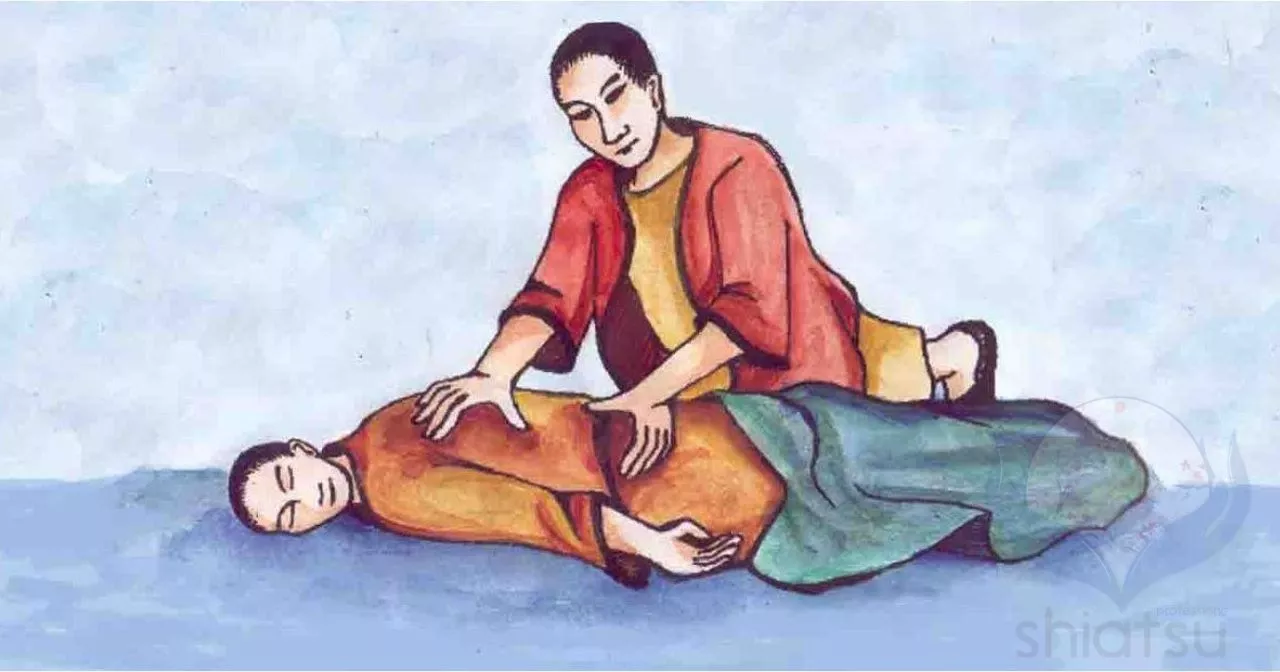
Various medicines that came from China, including herbal medicine, acupuncture, moxibustion and manual therapies, particularly Anma and Anpuku; became identified in Japan as Kampo medicine. Anma means pressing and rubbing, Anpuka means treatment of the abdomen.
The Anma and Anpuku techniques were widely practiced and in this long period one figure appears, worth mentioning. The famous herbalist Todo Yoshimasu (1702-1773) supported the theory that every alteration of health resulted from intoxication located in the abdomen - "the abdomen is the origin of life and also of every disease".


Shiatsu style by Tokujiro Namikoshi
Tokujiro Namikoshi, a fundamental figure in the history of shiatsu, was born in 1905 on the island of Shikoku, the southernmost part of Japan. In 1911 his family was forced to move north to the island of Hokkaido.
From the very first day his mother complained of severe joint pain (she suffered from rheumatism) and so at the age of 7 Namikoshi successfully tried to alleviate her pain. He realized his abilities and at the age of 17 moved to Tokyo to learn various massage techniques.
He became a student of the famous massage practitioner Odagawa. After four years of studies he passed the exam with full votes. In 1926 he opened a massage wellness center in downtown Sapporo.
The Namikoshi shiatsu style focuses primarily on the symptoms. The pressure technique is sophisticated and varies according to the area of the body to which it must be applied. For Namikoshi, Shiatsu is an art.
